A Phoenix summer will find every weak spot in a building. Hot air pushes in through the gaps around top plates, can lights and plumbing runs. The attic bakes well past the outdoor temperature. And the air conditioner, which has already been running since spring, keeps chasing a thermostat setting it never quite holds.
Spray foam insulation goes after both halves of that problem at once. It insulates, and it seals. If you are weighing foam for a home, a shop or a commercial building anywhere in the Phoenix metro, this is the place to start.
What spray foam actually is
Spray polyurethane foam, usually shortened to SPF, starts as two liquids that are kept separate until the moment they are applied. When they meet, they react, expand and cure into a solid foam that bonds to whatever surface it lands on: roof decking, studs, block, metal panels.
Because it goes on as a liquid and grows in place, it fills odd shapes that rigid board and batts struggle with, wrapping around wiring and sealing the cracks that let conditioned air out and dusty attic air in.
Traditional insulation slows heat moving through a material. Foam does that too, but it also stops air from moving through the assembly. In a hot, dry climate where the air outside can be 40 or 50 degrees warmer than the air inside, that matters a great deal.
Open cell vs closed cell at a glance
There are two families of spray foam, and choosing between them is the first real decision on most projects.
| Open cell | Closed cell | |
|---|---|---|
| Density | Light, soft, about half a pound per cubic foot | Dense and rigid, about two pounds per cubic foot |
| R-value per inch | Roughly R-3.5 to R-3.8 | Roughly R-6 to R-7 |
| Air sealing | Yes, at typical thickness | Yes |
| Moisture | Vapor-permeable; lets assemblies dry | Acts as a vapor retarder at around 2 inches |
| Sound | Noticeably dampens noise | Less sound benefit |
| Structure | Adds no stiffness | Adds some racking strength to walls and decks |
| Cost per R | Usually lower | Usually higher |
| Typical uses | Roof decks in homes, interior and exterior walls | Metal buildings, pole barns, commercial roofs, tight cavities |
For a deeper look at each, see our pages on open cell spray foam and closed cell spray foam. Plenty of buildings end up with both.
Where it goes
Attics and the underside of the roof deck
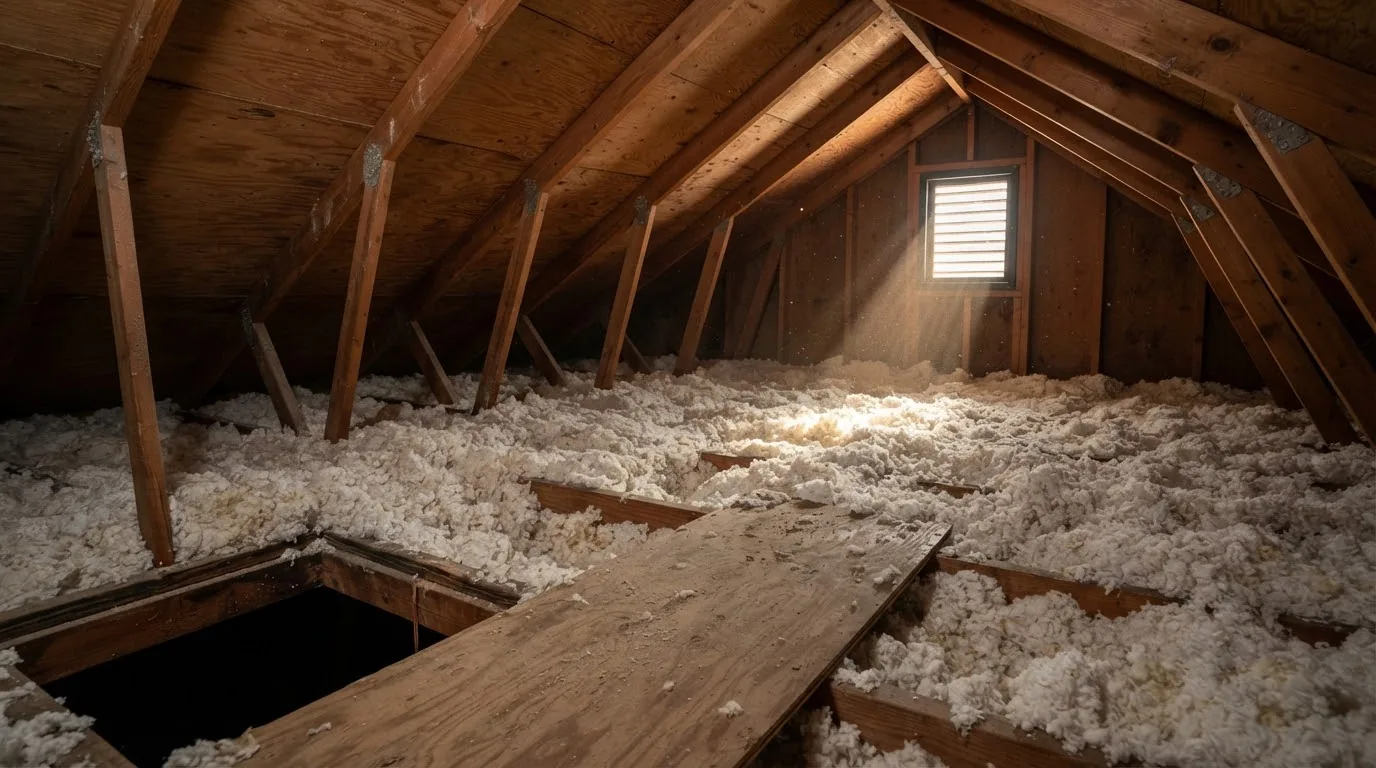
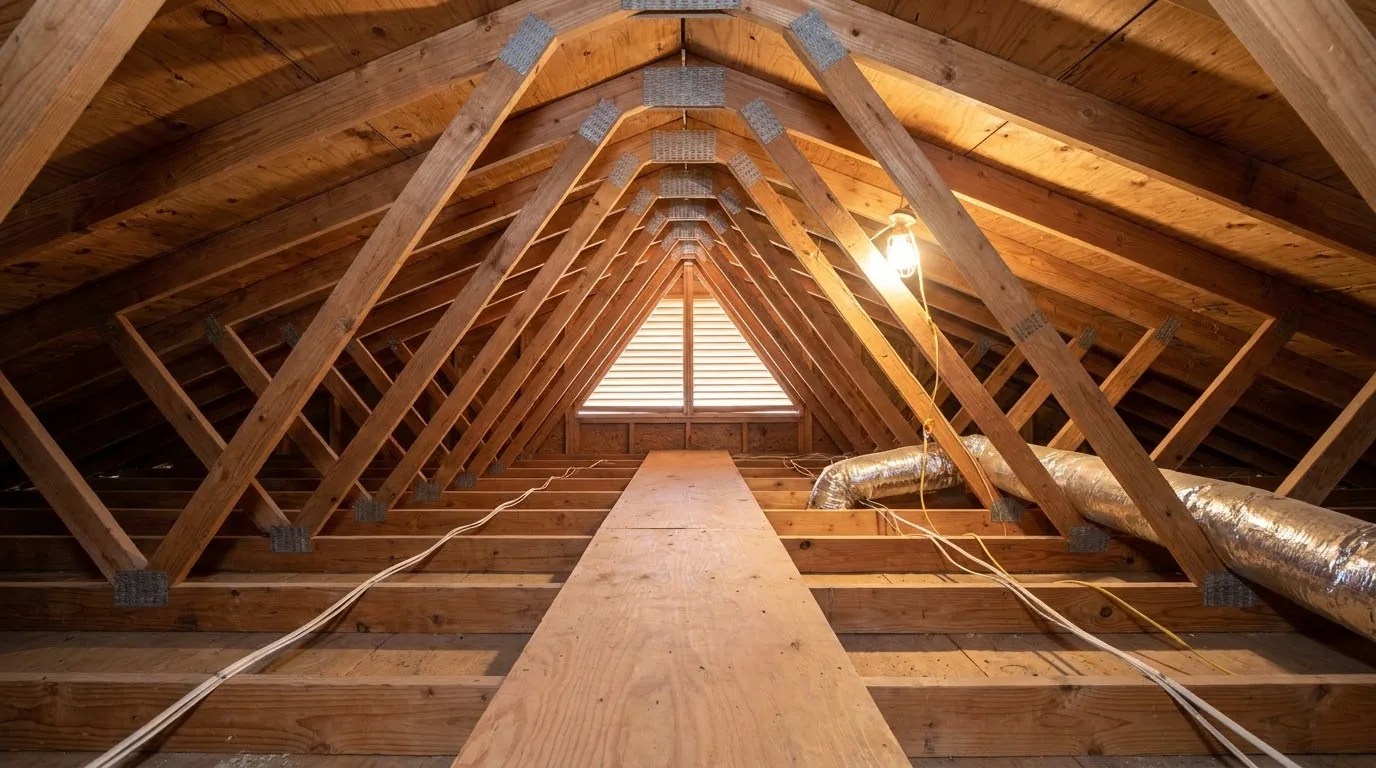
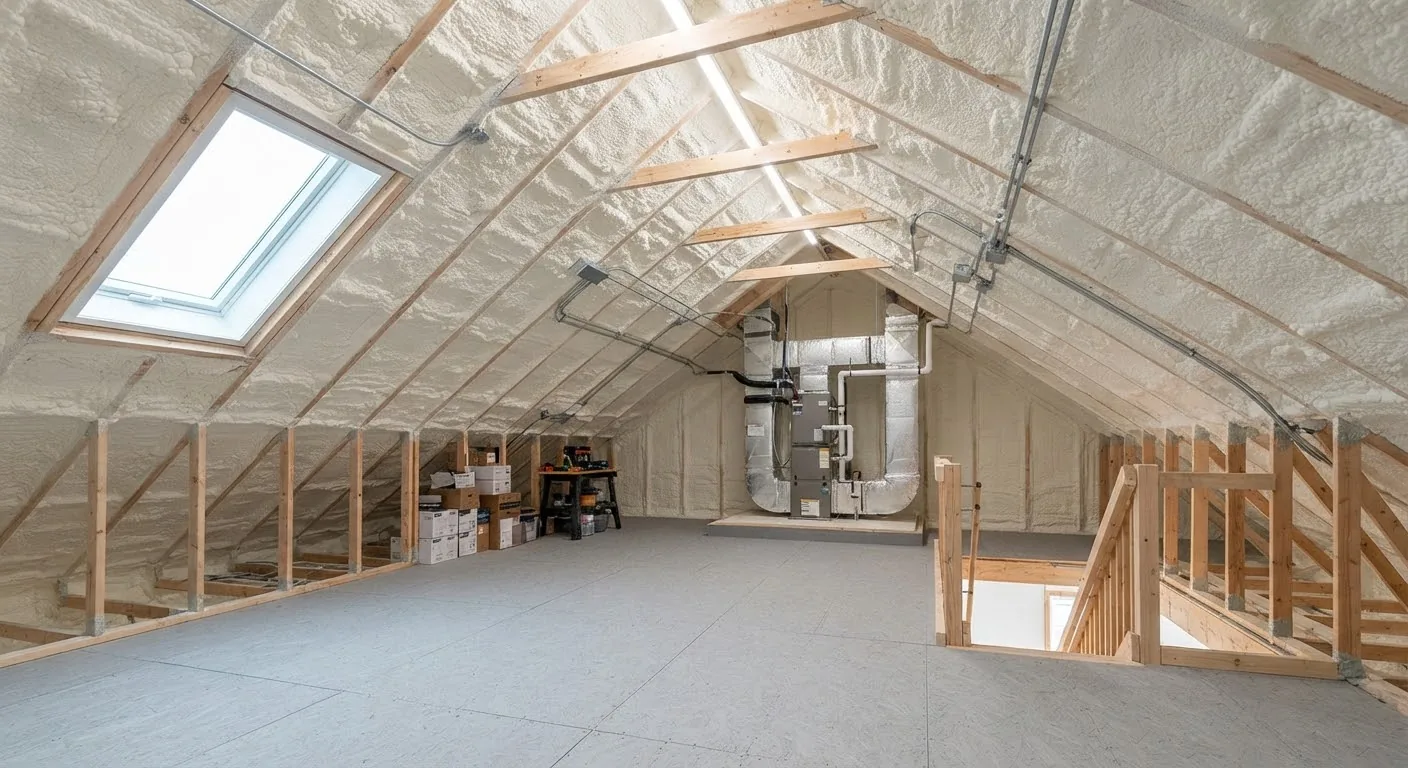
This is the big one in Arizona. Instead of laying insulation on the attic floor and leaving the attic as an oven, foam is applied to the underside of the roof deck. The attic becomes part of the conditioned space, or close to it. Ductwork and air handlers that live up there stop sitting in extreme heat, which is often where a lot of cooling is lost in Valley homes.
Walls
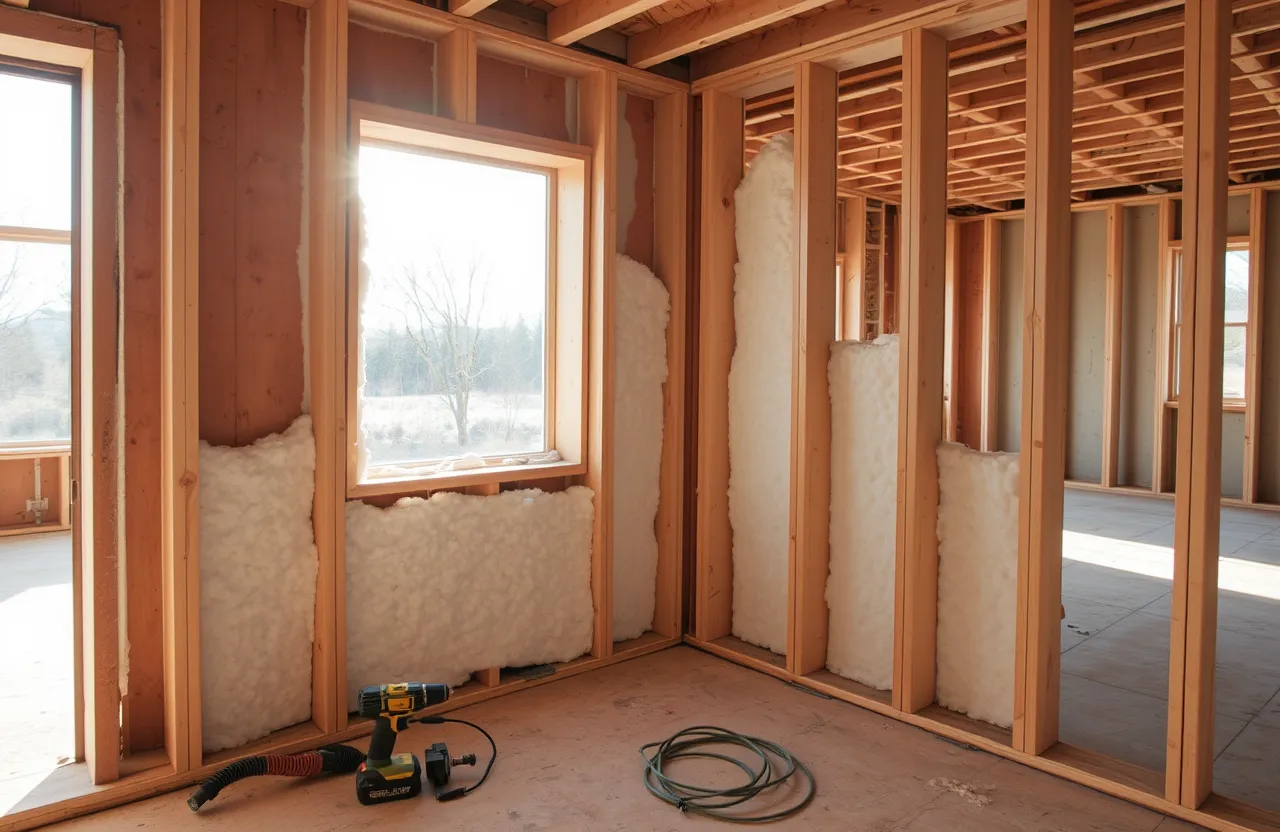
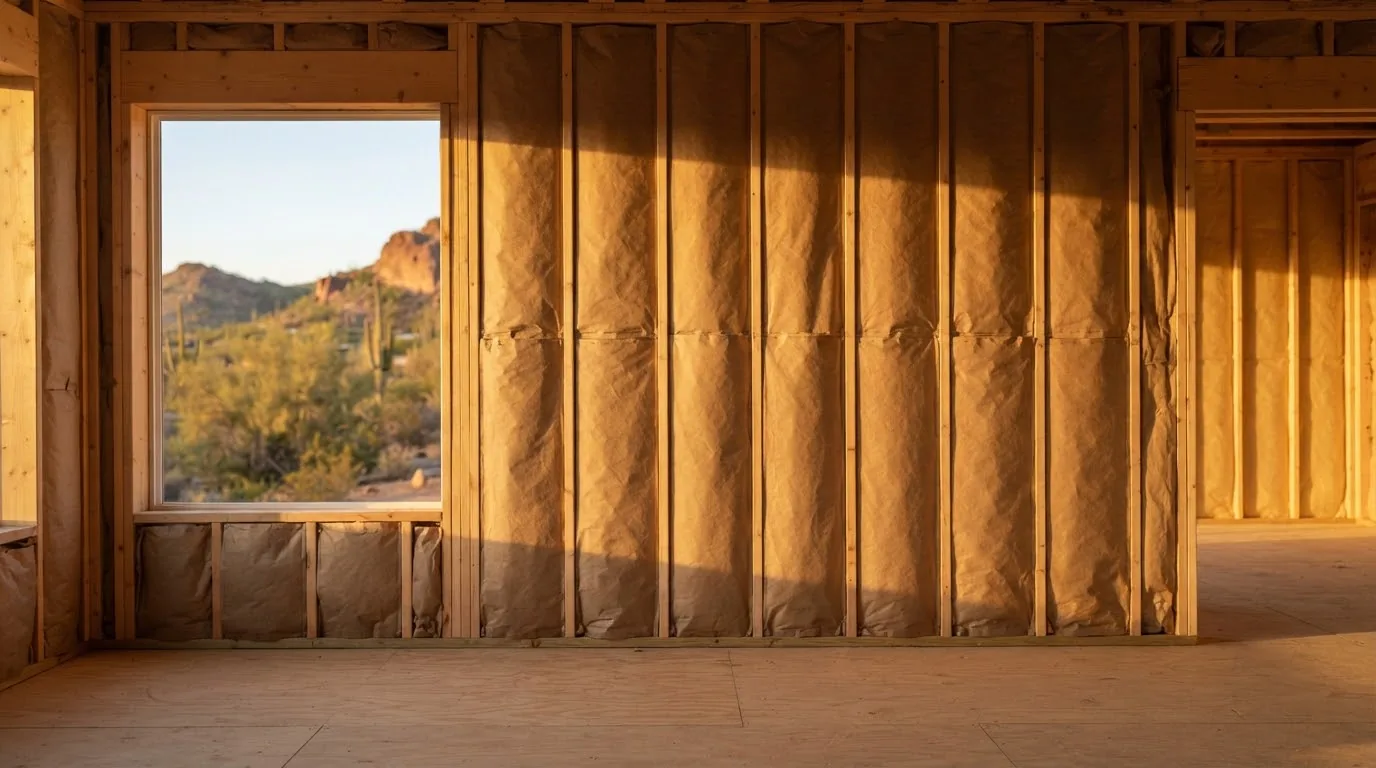
In new construction and major remodels, foam fills stud cavities and seals the framing. In block homes, we look at where foam can reasonably help, such as framed walls, bump-outs and furred interior walls, and tell you plainly where it will not.
Crawlspaces
Crawlspaces are uncommon in the Valley, but where they exist, closed cell on the walls or floor above cuts drafts and holds back moisture.
Metal buildings and shops
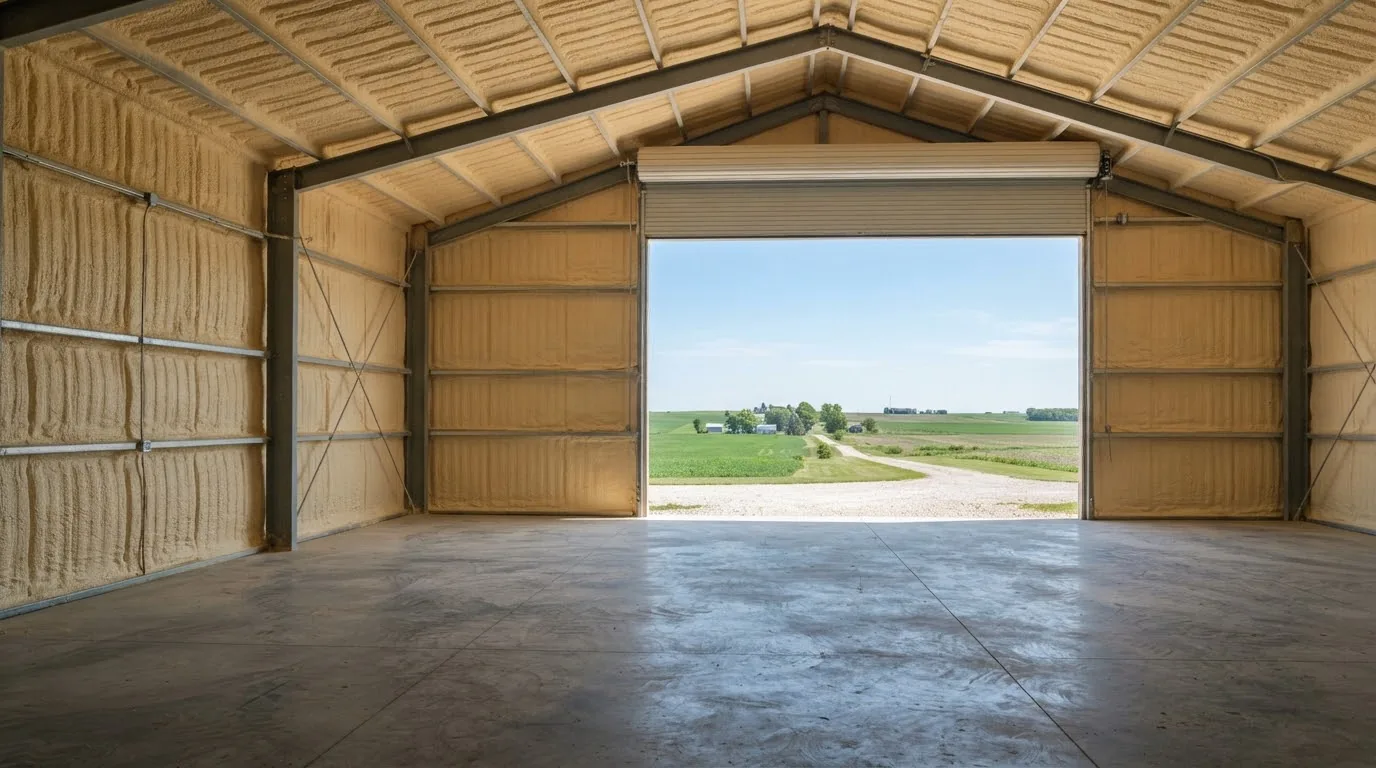
Bare metal panels turn into radiators in the afternoon sun and collect condensation when temperatures swing. Closed cell foam stiffens the panels, stops that condensation and makes the space workable.
Garages
An insulated garage stays more tolerable, and a bedroom above it stops being the hottest room in the house.
Why it matters when it is 115 outside
On a July afternoon, a vented attic in the Valley can run far hotter than the air outside. Every duct, every leaky ceiling penetration and every gap in the top plates sits in that heat.
The Department of Energy and ENERGY STAR both point to the same basic idea: sealing air leaks and adding insulation reduce the load on heating and cooling equipment. How much any one home saves depends on the house, and we will not hand you a percentage we cannot stand behind. What we can say is that foam often makes the upstairs livable again, can cut the length of cooling cycles, and keeps a lot of monsoon dust out of the living space.
How a job runs with us
- Free assessment. We come out, look at the attic, walls or building, and ask what is bothering you: hot rooms, high bills, noise, dust.
- Detailed proposal. You get a written proposal that spells out where foam goes, which type, how thick and what it costs. No vague line items.
- Scheduled install. We book the work at a time that suits you. Spray foam needs the space cleared of people and pets during application and for a period afterward, and we plan around that with you.
- Warranty on completed work. Our workmanship is backed by a warranty, and we explain its terms before we start.
- Thorough cleanup. We mask and protect before spraying, and we leave the site clean. Small-town family values apply to the job site too.
Book a free spray foam assessment
Homes and commercial buildings
Much of our foam work in Arizona is residential: ranch homes, two-story houses, additions and garages. We also insulate commercial buildings, warehouses, shops and metal structures with the same approach: measure carefully, explain clearly, price fairly.
We work across the metro, from Phoenix out to the East Valley, including Chandler, where we are currently based.