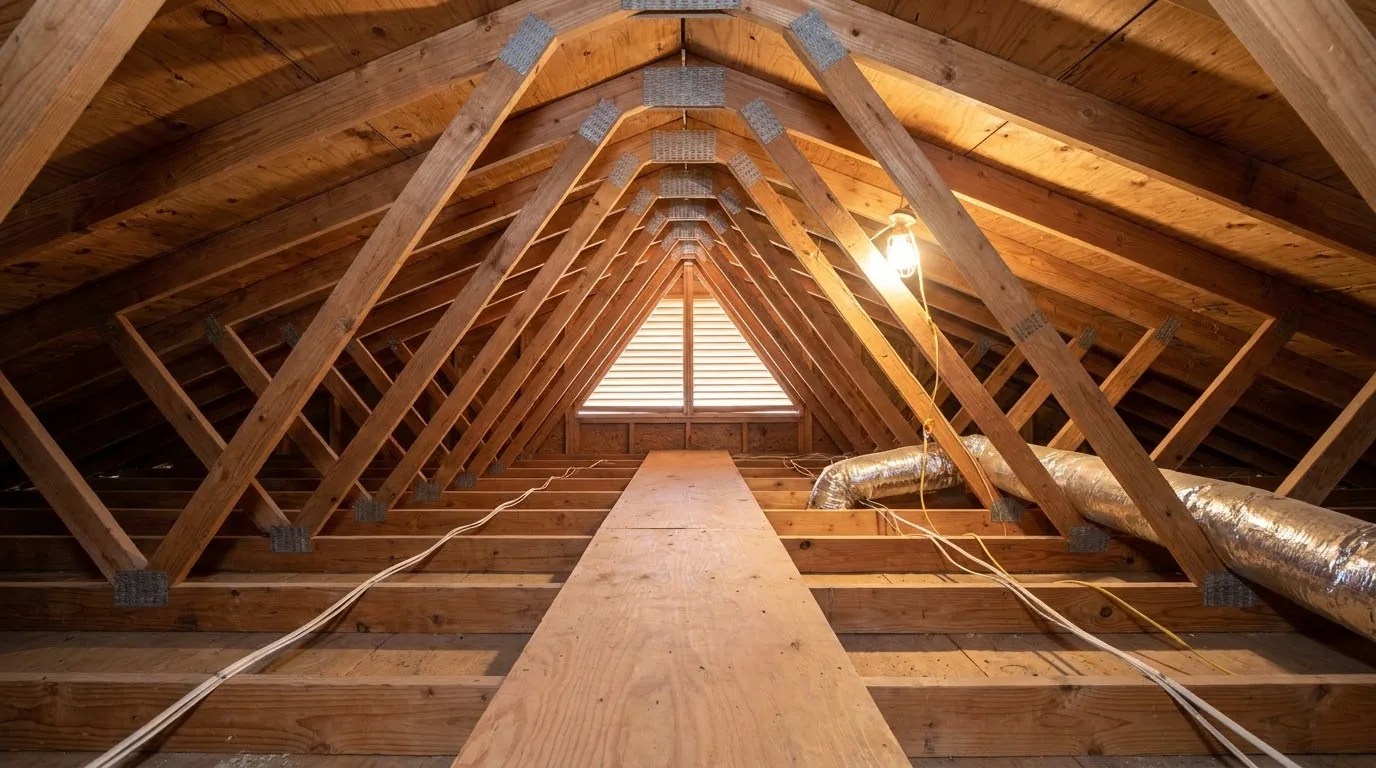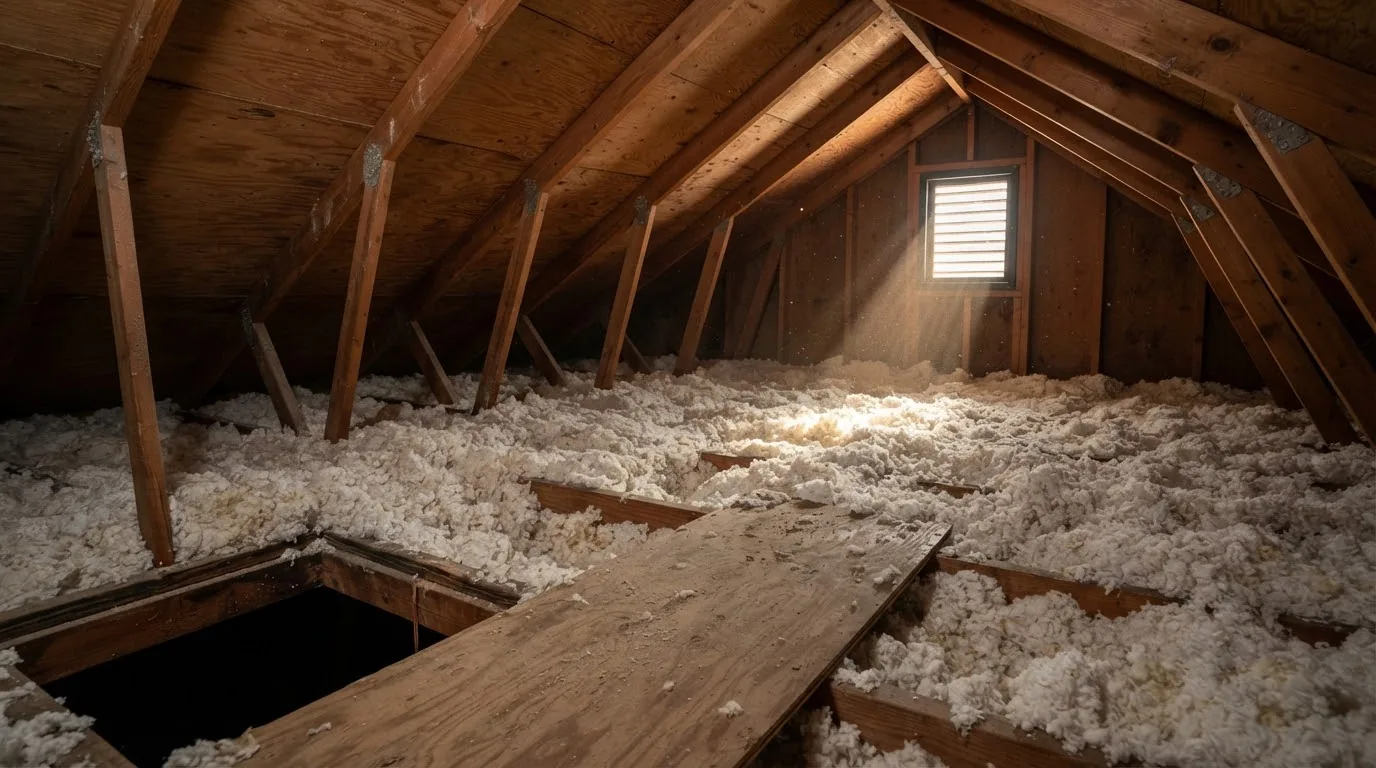
Here is a quick test. Next time you are in the attic, or have someone up there, take a tape measure to the insulation on the attic floor. In a lot of Valley homes built before the last couple of decades, you will find a few inches of matted, dusty material that has settled over the years. Sometimes it has been pushed aside by cable installers and HVAC techs, leaving bare drywall in patches.
That thin blanket is all that stands between your ceilings and an attic that can get far hotter than the outdoor air in July. Blown-in insulation is the most direct way to fix it.
Signs your attic needs more
- You can see the tops of the ceiling joists. If the insulation is level with or below the joists, there is likely not enough.
- Upstairs or end rooms run much hotter than the rest of the house in summer.
- Ceilings feel warm to the touch on a hot afternoon.
- Your AC runs nearly nonstop from late spring into fall.
- The insulation is uneven, with bare spots, trampled paths or piles pushed aside.
- You have never had the attic checked since moving in.
How much insulation is enough in Arizona?
Phoenix and most of the metro sit in what the Department of Energy maps as a hot, dry climate zone (Zone 2, with some higher-elevation areas in Zone 3). For attics in these zones, the DOE's general guidance is roughly R-30 to R-60, with R-30 often cited as a starting point for an uninsulated attic and higher levels for adding to an existing layer. Local building code sets its own minimums for new construction.
What does that look like in depth? It depends on the material:
| Loose-fill material | Approximate R per inch | Rough depth for R-38 |
|---|---|---|
| Fiberglass | About R-2.2 to R-2.9 | Roughly 13 to 17 inches |
| Cellulose | About R-3.2 to R-3.8 | Roughly 10 to 12 inches |
These are typical ranges. Manufacturers publish exact depth and bag-count charts for each product, and we install to the product's own chart so the stated R-value is real, not a guess.
Which target is right for your house depends on what is already there, how your attic is laid out, where the ductwork runs and your budget. We will give you a clear recommendation during the assessment.
Fiberglass or cellulose?
Both are common, proven loose-fill options. The honest differences:
Loose-fill fiberglass
Made from spun glass fibers. It does not absorb much moisture, does not settle as much over time as cellulose, and is naturally noncombustible. It is lighter, so it puts less weight on ceiling drywall. You need more depth to hit the same R-value.
Cellulose
Made mostly from recycled paper treated with fire retardants. It is denser, offers more R-value per inch, and its density helps it fill around obstacles and slow air movement through the insulation layer itself. It settles more after installation, so it is blown slightly deeper to account for that. It should be kept dry.
Either can do the job well in an Arizona attic. We explain which one we suggest for your home and why.
Blown-in works best with air sealing
Loose-fill insulation slows heat, but air passes through it. If the ceiling below has open gaps around light fixtures, plumbing stacks, wiring holes, top plates and the attic hatch, hot dusty attic air and conditioned house air keep trading places right through the new insulation.
The DOE and ENERGY STAR both recommend sealing air leaks before adding attic insulation, and we agree. Air sealing is listed as its own item on our proposals. It is often the least glamorous part of the job and one of the most useful.
Other prep we handle as needed:
- Baffles at the eaves so insulation does not block soffit vents in a vented attic.
- Dams around the attic hatch so insulation stays put.
- Clearance around heat sources such as flues and certain light fixtures, per code.
- Insulating and weatherstripping the attic hatch itself.
If the existing insulation is contaminated by rodents, soaked by an old roof leak or full of debris, it should come out before new insulation goes in. See insulation removal.
When foam is the better choice
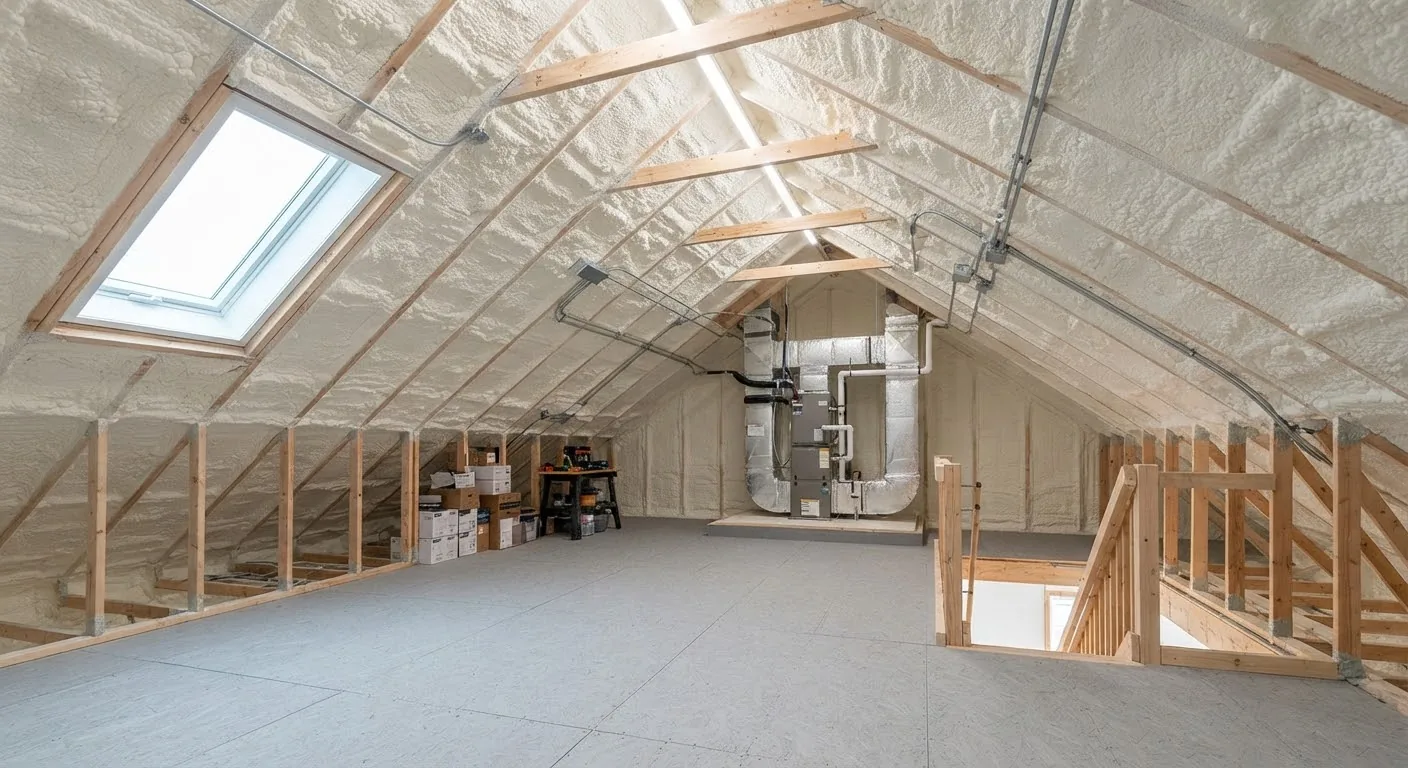
Blown-in goes on the attic floor and keeps the attic itself vented and hot. If your ductwork and air handler are in the attic, as they are in many Valley homes, they stay in that heat. In that situation, sealing the roof deck with spray foam insulation can make more sense. If the ducts are elsewhere or the budget is limited, blown-in is usually the economical way to make a big difference.
Book a free attic insulation check
The job, step by step
- Free assessment. We measure existing depth, look at air leaks, venting and ductwork, and check the condition of what is up there.
- Detailed proposal. Material, target R-value and depth, air sealing scope, prep items and price, in writing.
- Scheduled install. Most blown-in jobs are quick, often done in a day. Morning starts help in summer, when attics are at their worst by afternoon.
- Warranty on completed work. Terms explained before we begin.
- Cleanup. Hoses run through protected paths, floors and entries are protected, and we leave the house as clean as we found it.
Blown-in is primarily a residential service, though we also insulate attic spaces in light commercial buildings. We work throughout the metro, including Mesa and Scottsdale.