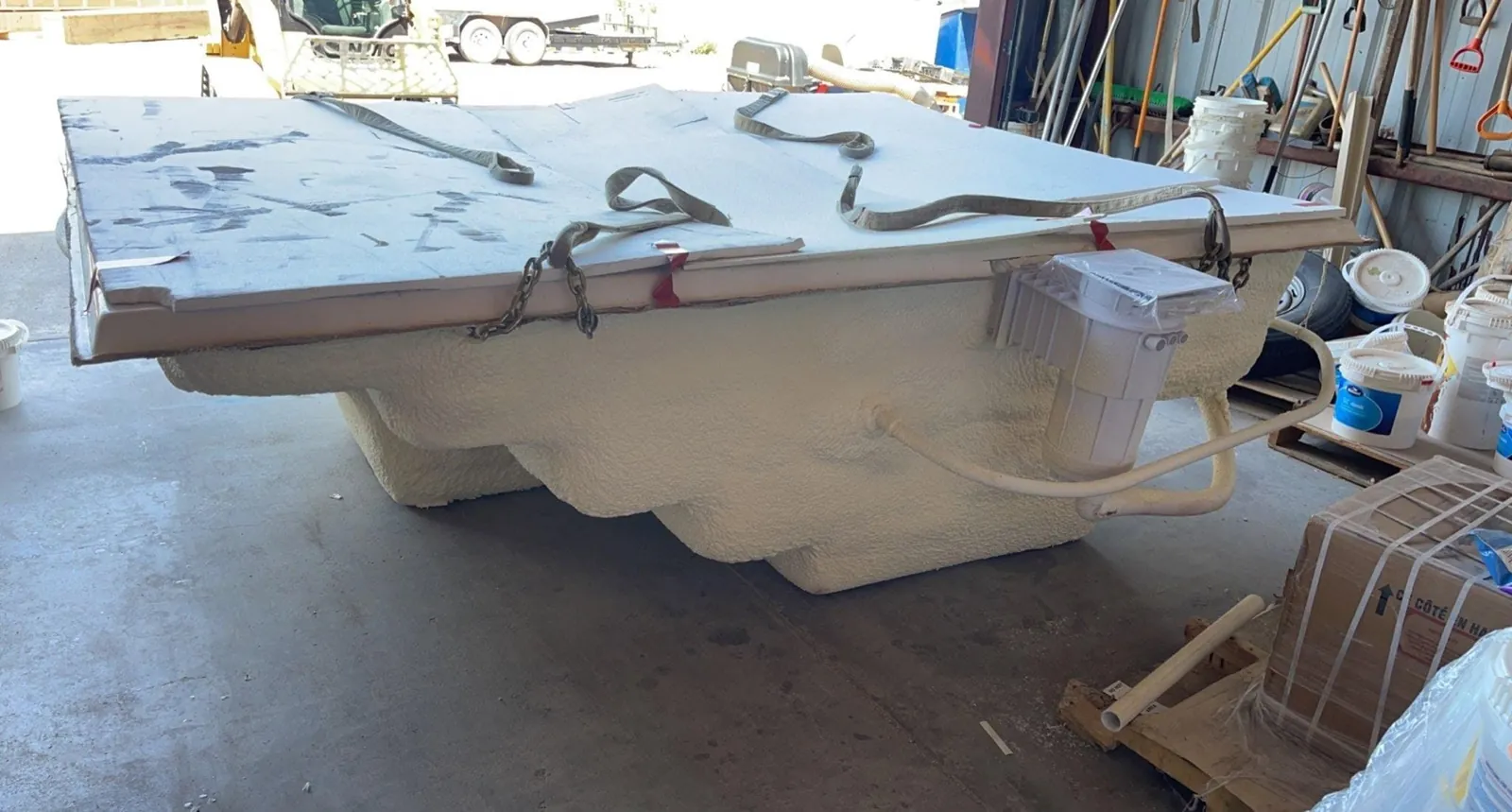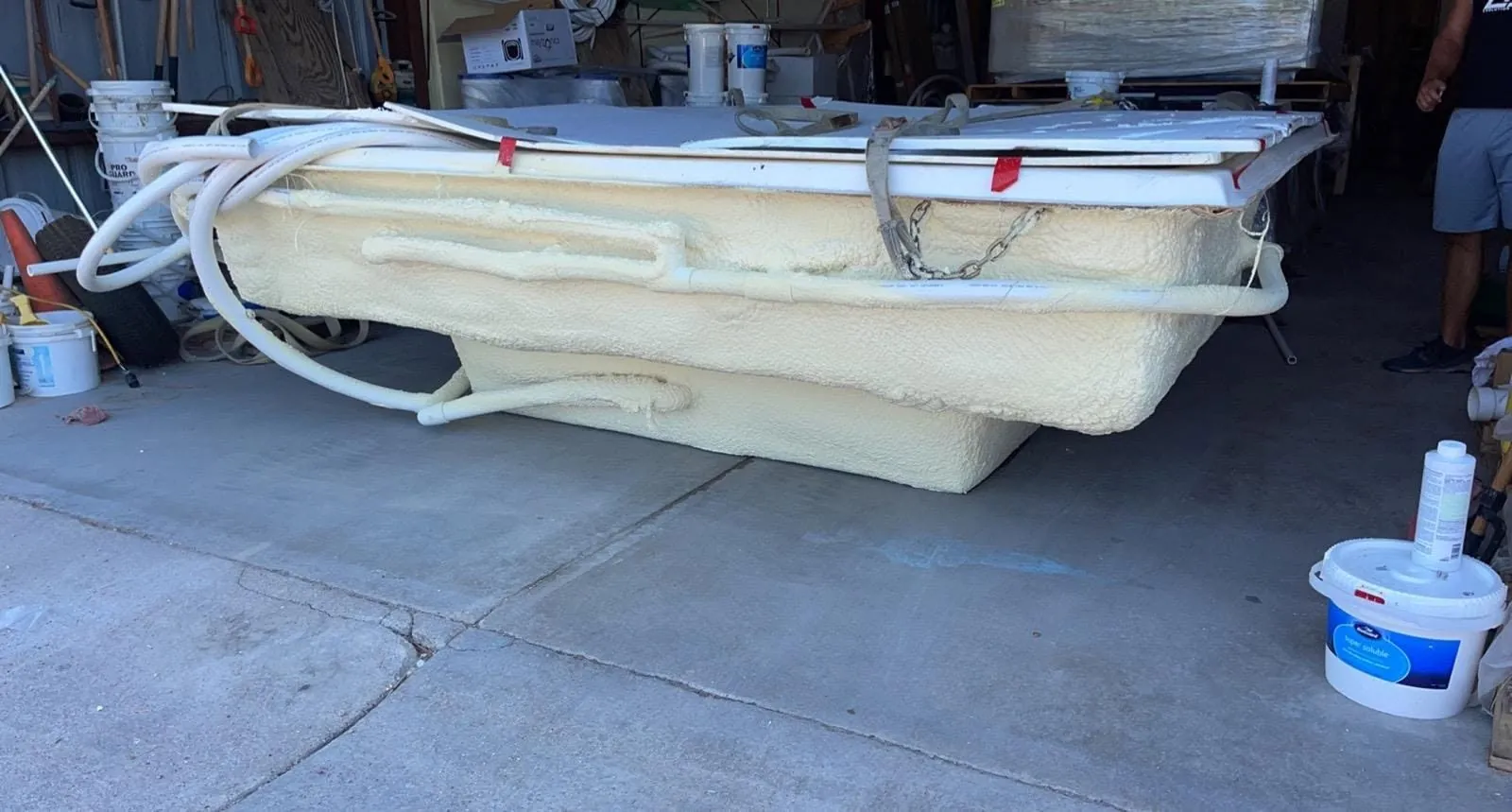
A spa holds a few hundred gallons of water at around 100 degrees. Any heat that slips out through the shell, the plumbing or the cabinet has to be put back by the heater, every hour of every day. Spraying closed-cell foam straight onto the underside of the shell is one of the most direct ways to slow that loss down.
What we foam
- Spa and hot tub shells. Closed-cell foam on the underside of the acrylic or fiberglass shell, built up around the footwell, the seats and the plumbing runs.
- Swim spas and plunge pools. The same approach on a larger shell, where there is more surface losing heat.
- Other molded shells that hold heated water. If it's a shell and the underside can be reached, ask us about it.
Why closed-cell foam
- It bonds to the shell. The foam sticks directly to the back of the shell, so there are no gaps for air to move through and carry heat away.
- It's rigid. Closed-cell foam cures hard, so it stiffens the shell and helps it carry the weight of water and people.
- It shrugs off moisture. A spa cabinet sees drips, splashes and condensation. Closed-cell foam takes on very little water, where fiberglass batts or soft foam can soak it up.
- More R-value per inch. Closed-cell foam insulates better per inch than open-cell foam or fiberglass, so a given thickness does more work.
Full foam or shell only
Some spas are built "full foam": the whole space under the shell is filled, plumbing and all. Others get foam on the shell only, with the cabinet walls handled separately.
Full foam holds heat best, and it holds the plumbing still. The trade-off is access. We'll walk through that trade-off with you before anything is sprayed, and we can keep pumps, heaters and other parts that need service clear of the foam.
How a job goes
- Free assessment. We look at the shell, the plumbing and the room there is to work.
- Written proposal. What gets foamed, how thick, and what stays clear.
- Prep. Finished surfaces, jets, fittings, pumps and the heater are masked so foam lands only where it should.
- Spray. Closed-cell foam goes on in passes, built up to the agreed depth.
- Trim and clean up. We trim the foam, check that what needs to stay reachable still is, and clean up the work area.
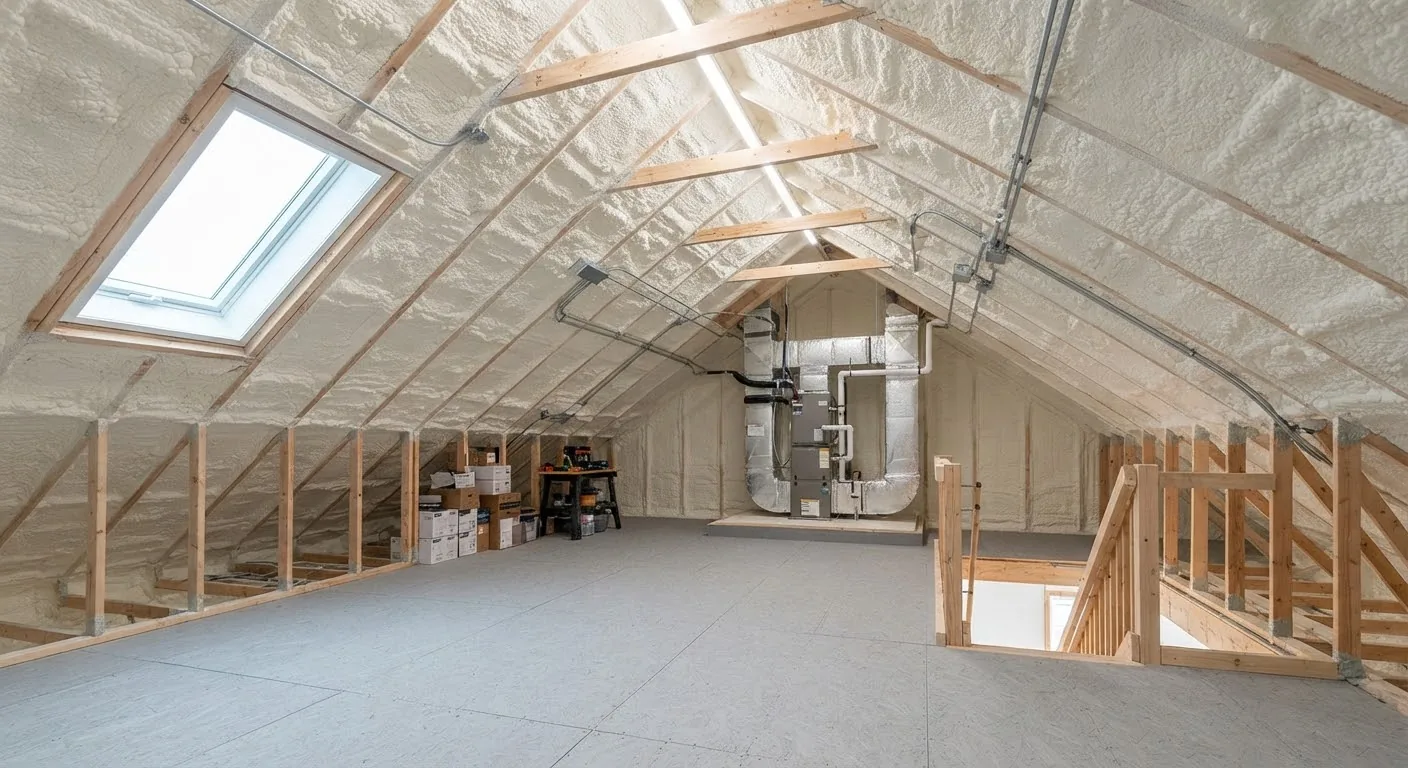
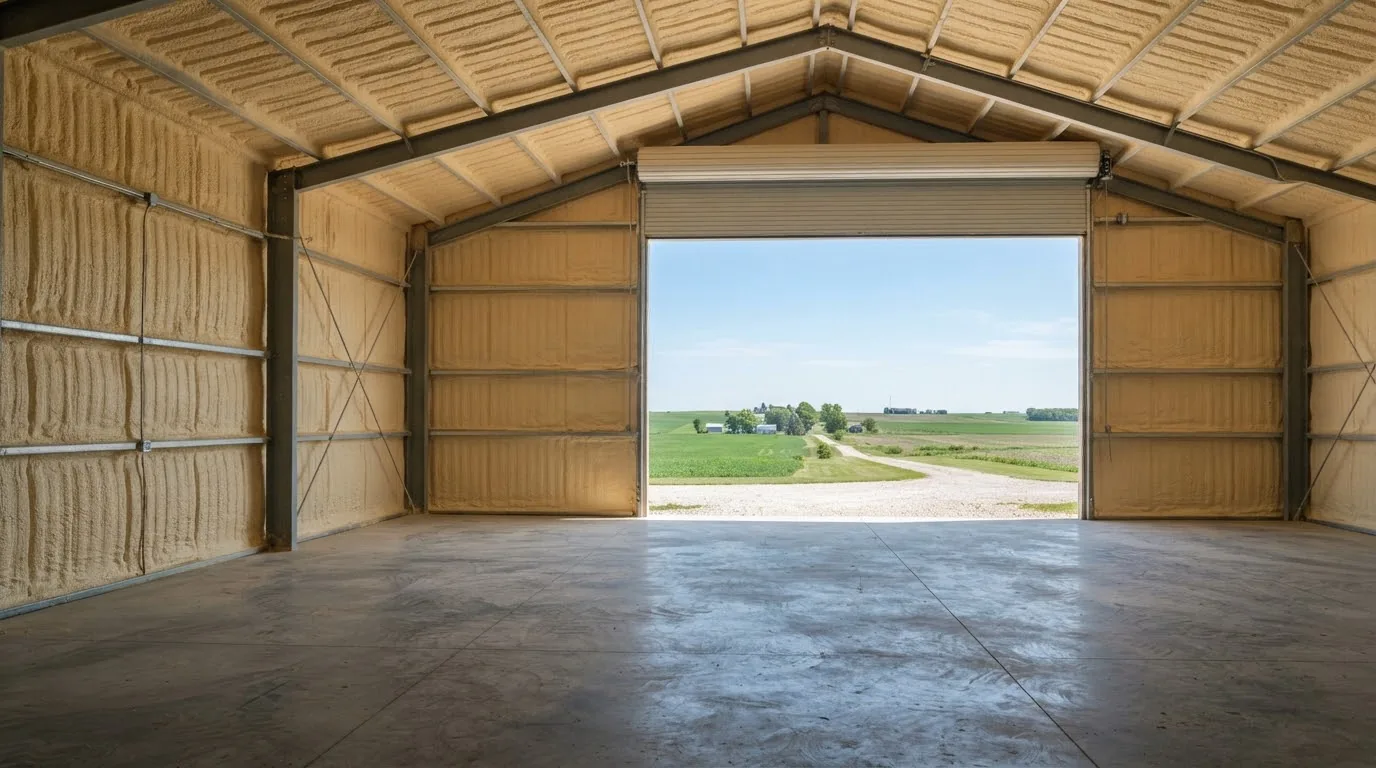
See more of our work in the job site gallery, or read about closed-cell spray foam in buildings.